
Increasing Abandoned Cart Conversion by up to 13%*
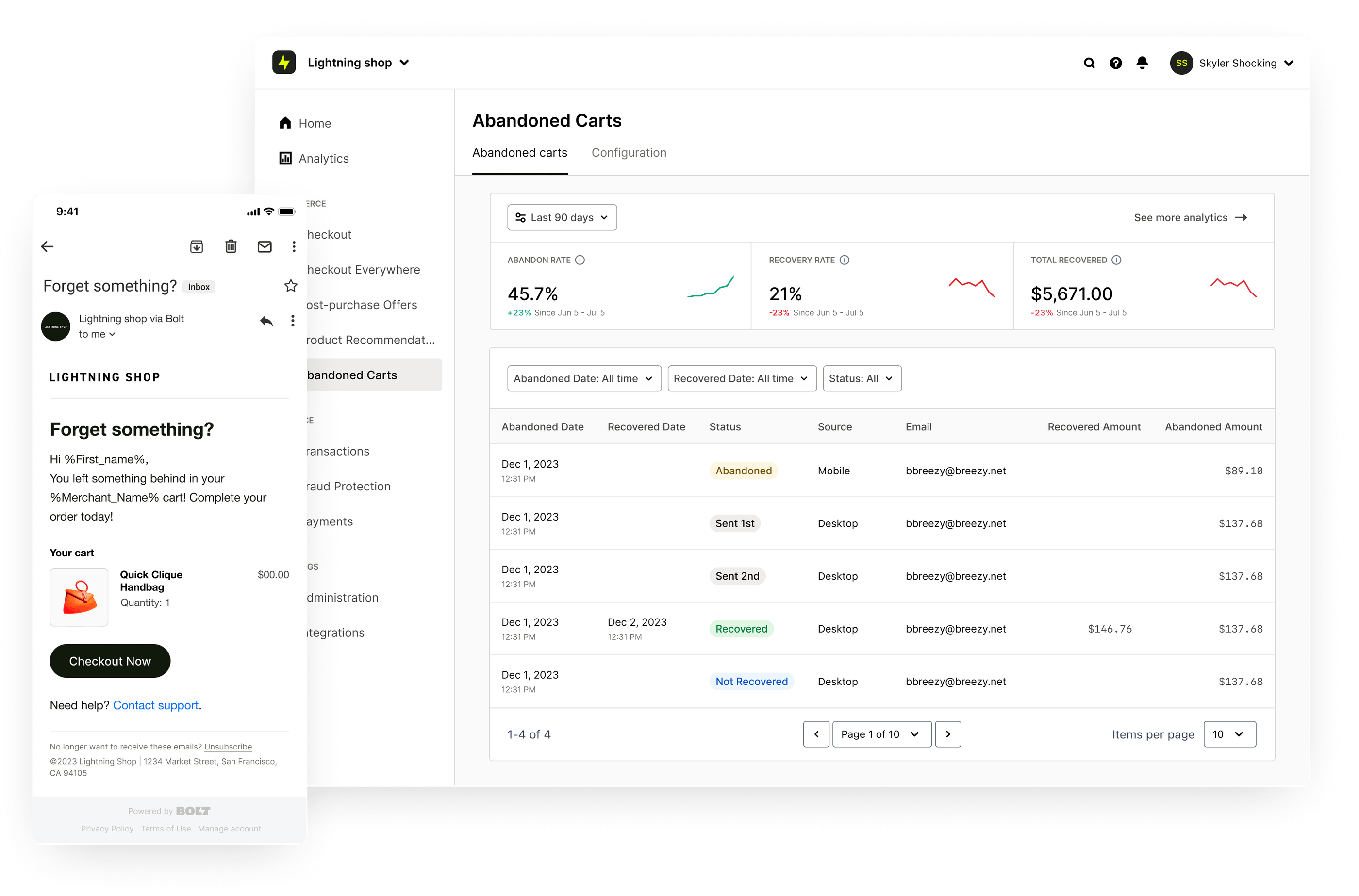
Overview
Recovering lost revenue through smarter cart recovery
Despite Bolt Checkout's streamlined and efficient purchasing process, the current abandoned cart feature lacked sophistication and efficacy. Checkout abandonment was anywhere from 45%-70% so by failing to effectively re-engage customers led to missed opportunities in recovering potentially lost sales.
The primary issues include inadequate retainment of items in the cart, lack of personalization in recovery emails, and insufficient incentives to motivate customers to complete their purchases. Additionally, the current merchant dashboard analytics did not provide detailed insights into cart abandonment.
Role
Lead Product DesignerPartners
Targeted Business Metrics
Research
Our team looked at competitive product features, abandonment by industry, peak months, and benchmark performance metrics.
The Problem
Across industries, 45-70% of shopping carts are abandoned before checkout. For Bolt's merchants, this represented millions in potentially lost revenue every month.
Objective
Improve cart recovery rates through better email personalization, smarter notification timing, and actionable merchant analytics.
Approach
Recovery emails were generic, poorly timed, and directed shoppers back to merchant homepages rather than their saved carts, losing all cart context and requiring shoppers to start over.

Design Process
Requirements Definition
Breaking down the key areas of improvement, from notification timing and email design to merchant-facing analytict, that would drive higher cart recovery rates.
Notification Timing
Optimized notification timing for maximum recovery
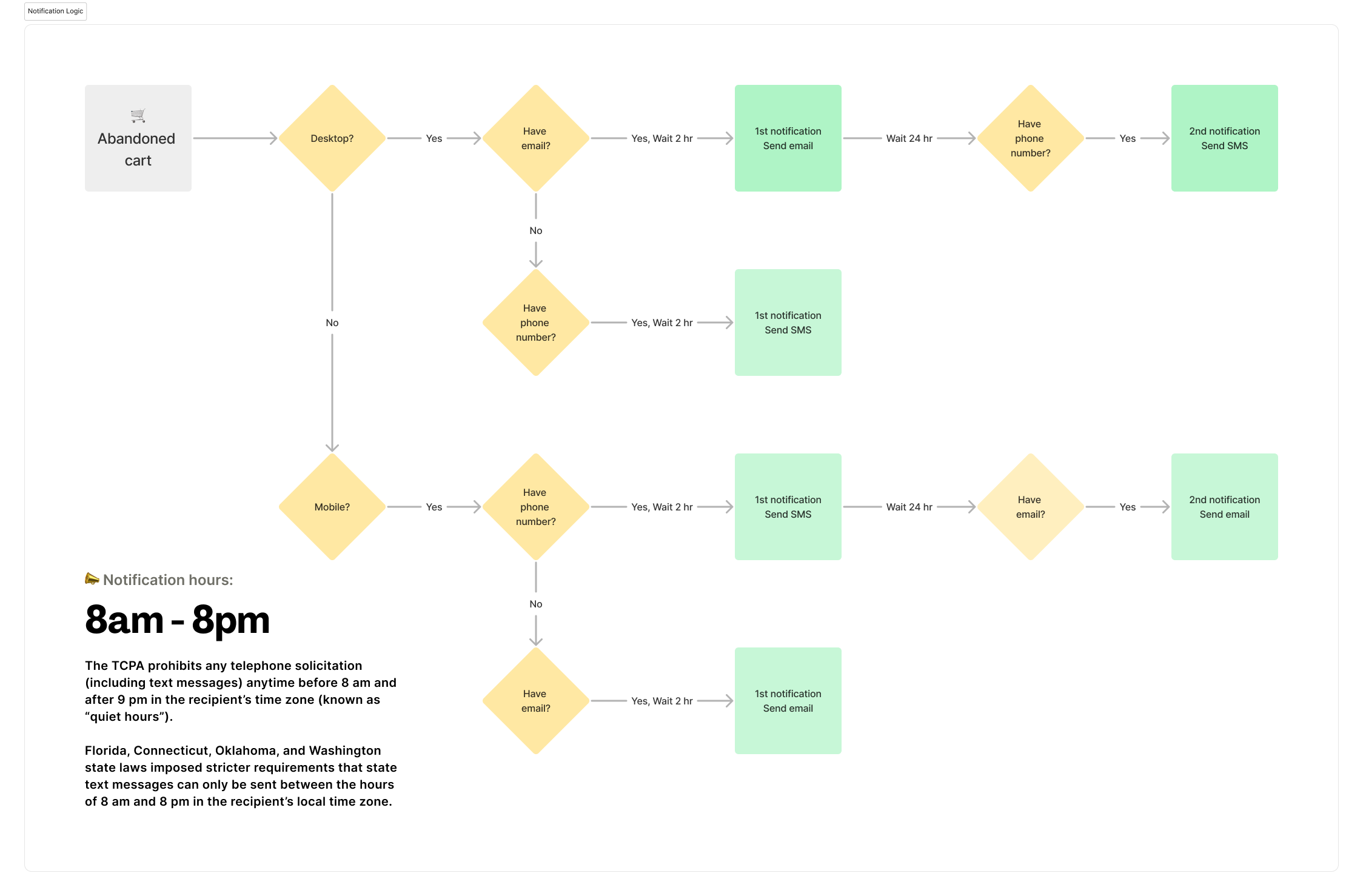
Through research and testing, we established strategic send windows to maximize engagement without overwhelming shoppers. The first email fires at 2 hours after abandonment, catching intent while it's still fresh, with a follow-up at 24 hours for shoppers who haven't yet returned.
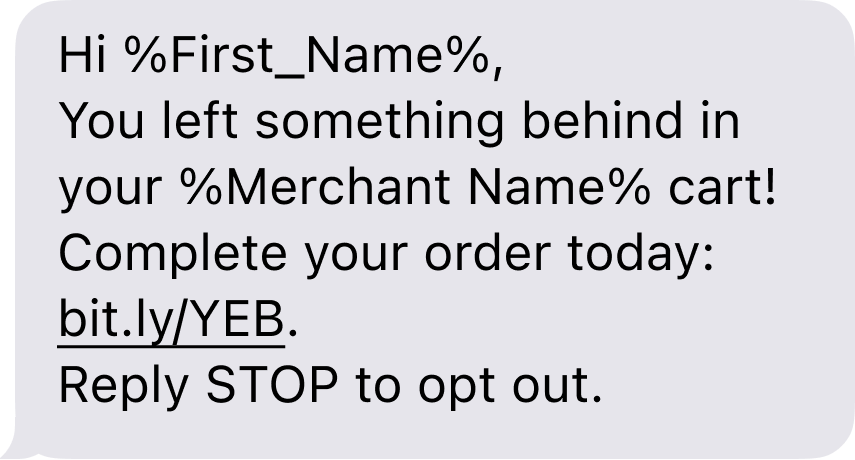
SMS notifications follow strict TCPA regulations, only sending during permitted hours and honoring opt-out preferences. The timing logic accounts for shopper timezone, consent status, and channel preferences to ensure compliant, effective outreach.
Email & SMS Redesign
Redesigning the branding and content in abandoned cart emails and SMS
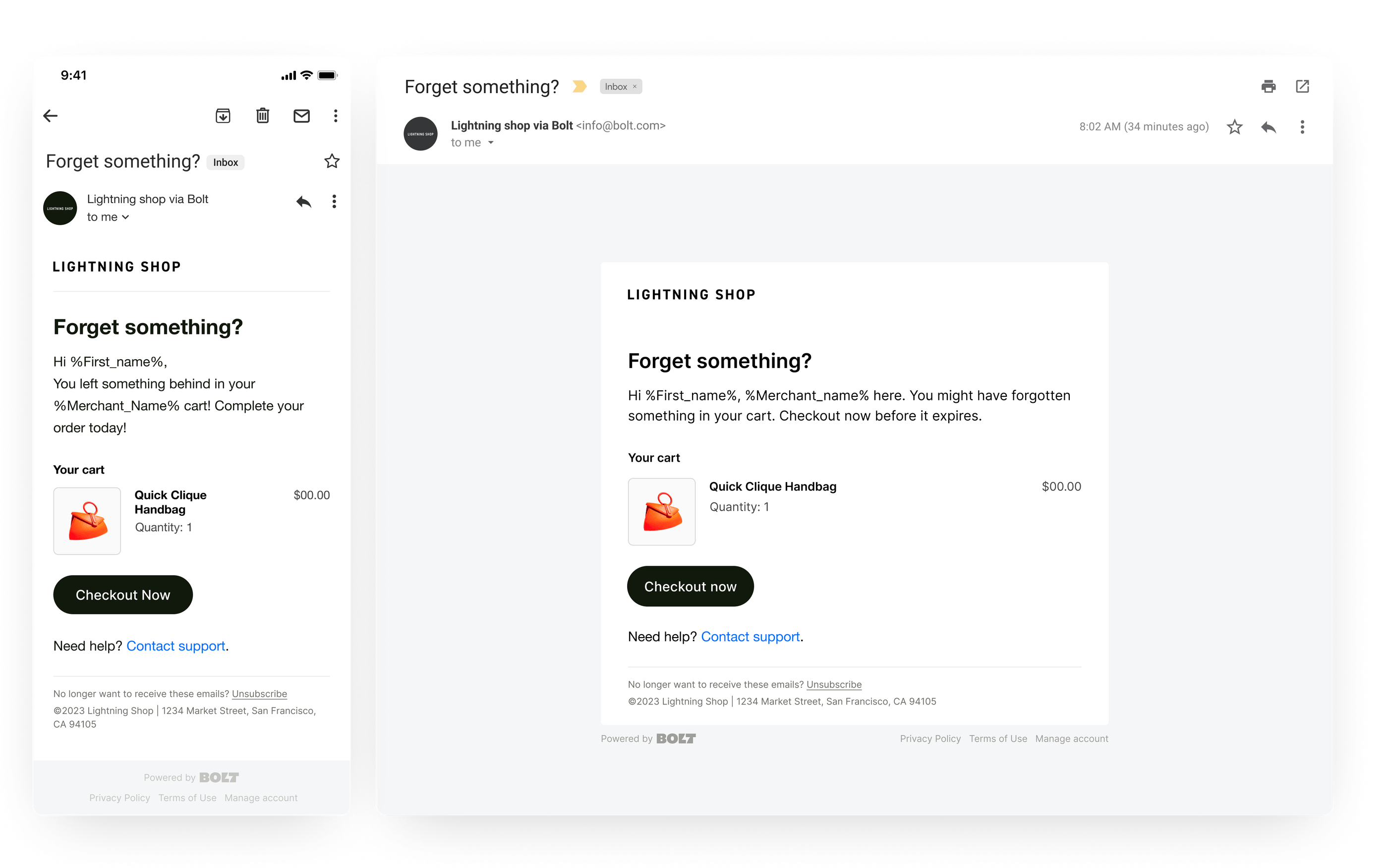
Emails were updated with new Bolt and merchant branding. I worked with our tech writer to optimize the subject line and email copy, and included a preview of the email notifications for the merchant within their dashboard.
The “Checkout Now” CTA in the emails used order tokens to pre-load the cart contents and any of the saved shopper information at the time of abandonment to maintain a one-click checkout from their email notification.
Merchant Dashboard
Giving merchants visibility and control
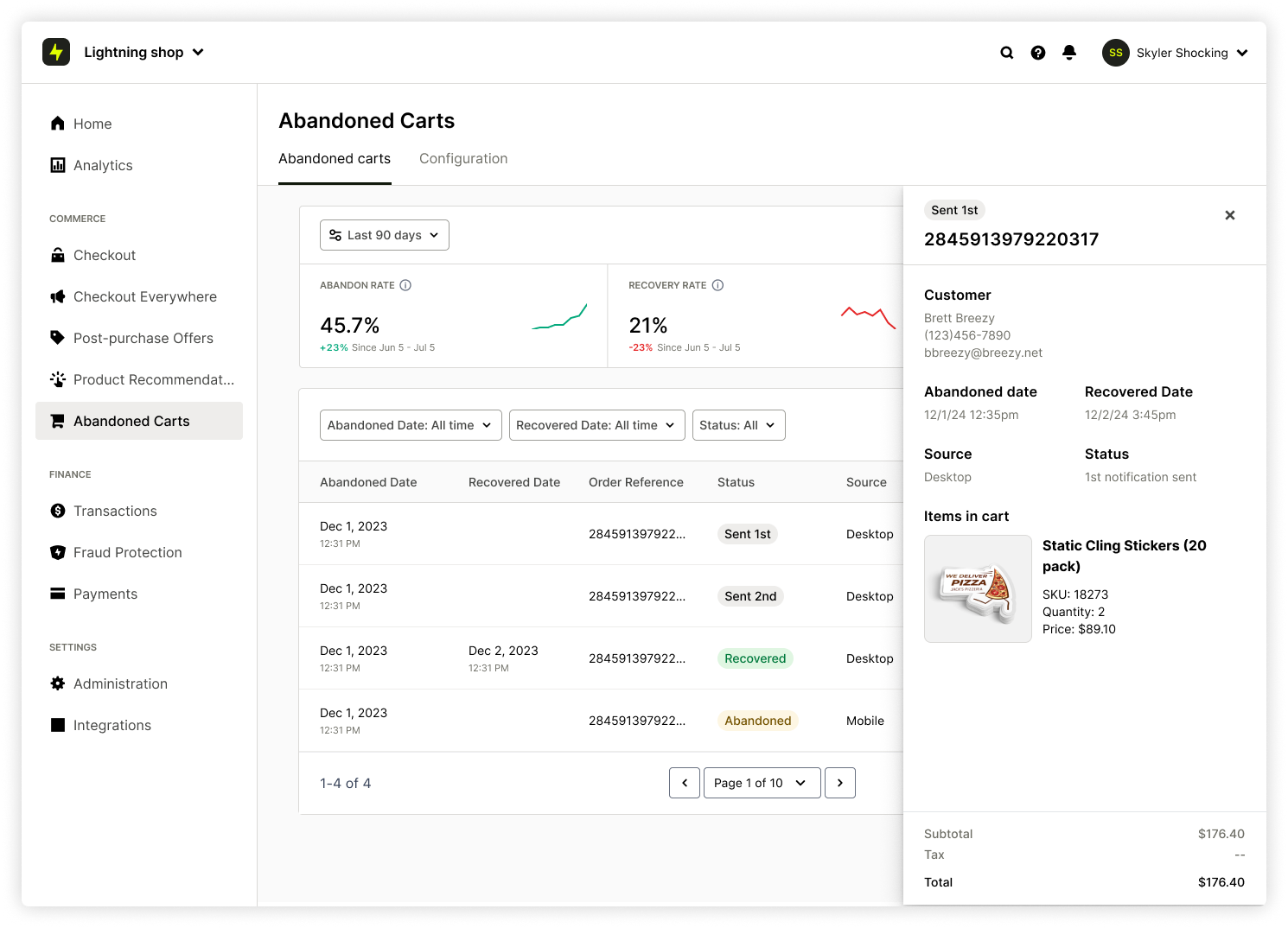
The merchant dashboard serves as the feature homepage, providing configuration controls for notification settings, branding, and send preferences.
Hero metrics surface key performance data at a glance, while detailed abandonment analytics help merchants understand recovery trends, open rates, and revenue impact over time.
SMS Consent
TCPA-compliant consent management
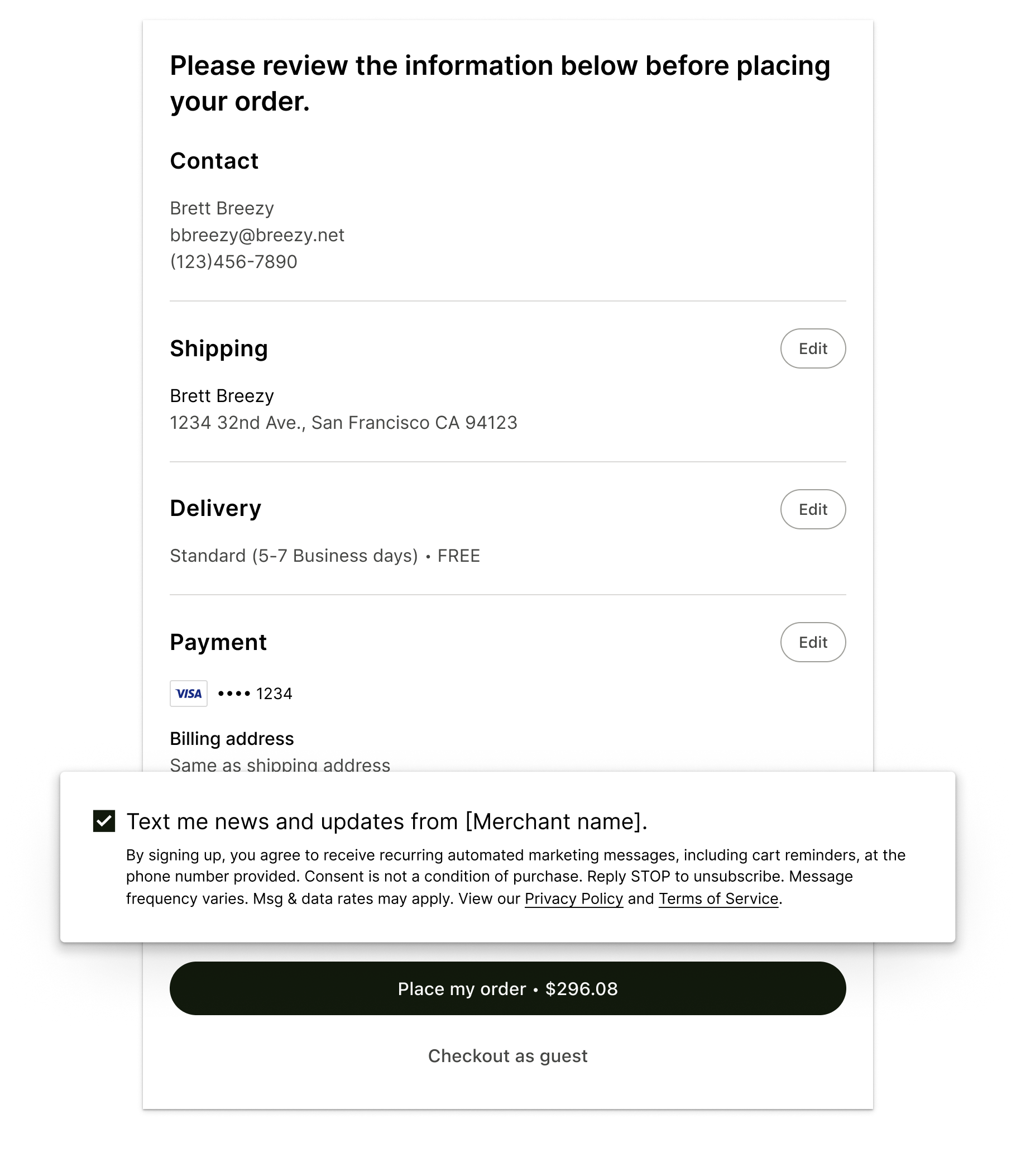
SMS recovery required a carefully designed consent collection flow to comply with TCPA regulations. We integrated consent capture directly into the checkout experience, making it easy for shoppers to opt in while maintaining full legal compliance.
The system tracks consent status per shopper, respects opt-out requests immediately, and provides a compliant flow for phone number collection from shoppers.
Go-to-Market
Supporting Go-to-Market & Internal Adoption
I also partnered with Product and Go-to-Market teams to help drive merchant adoption:
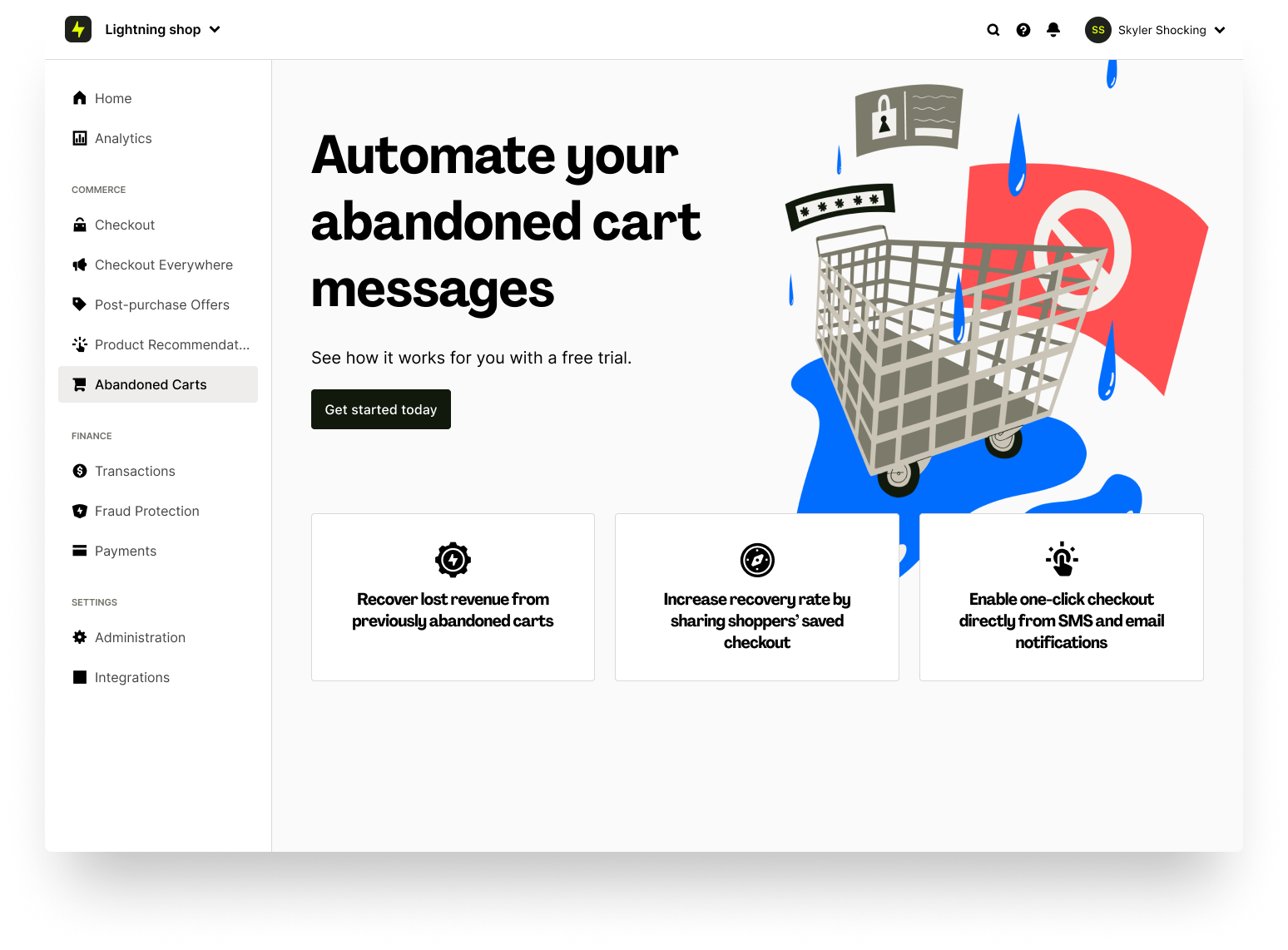
- Designed sales enablement materials, including a product pitch deck and demo visuals.
- Supported the PM with training sessions to Sales & CSM teams on product setup, functionality, and value.
Results
Recovering more than $18M* in lost revenue
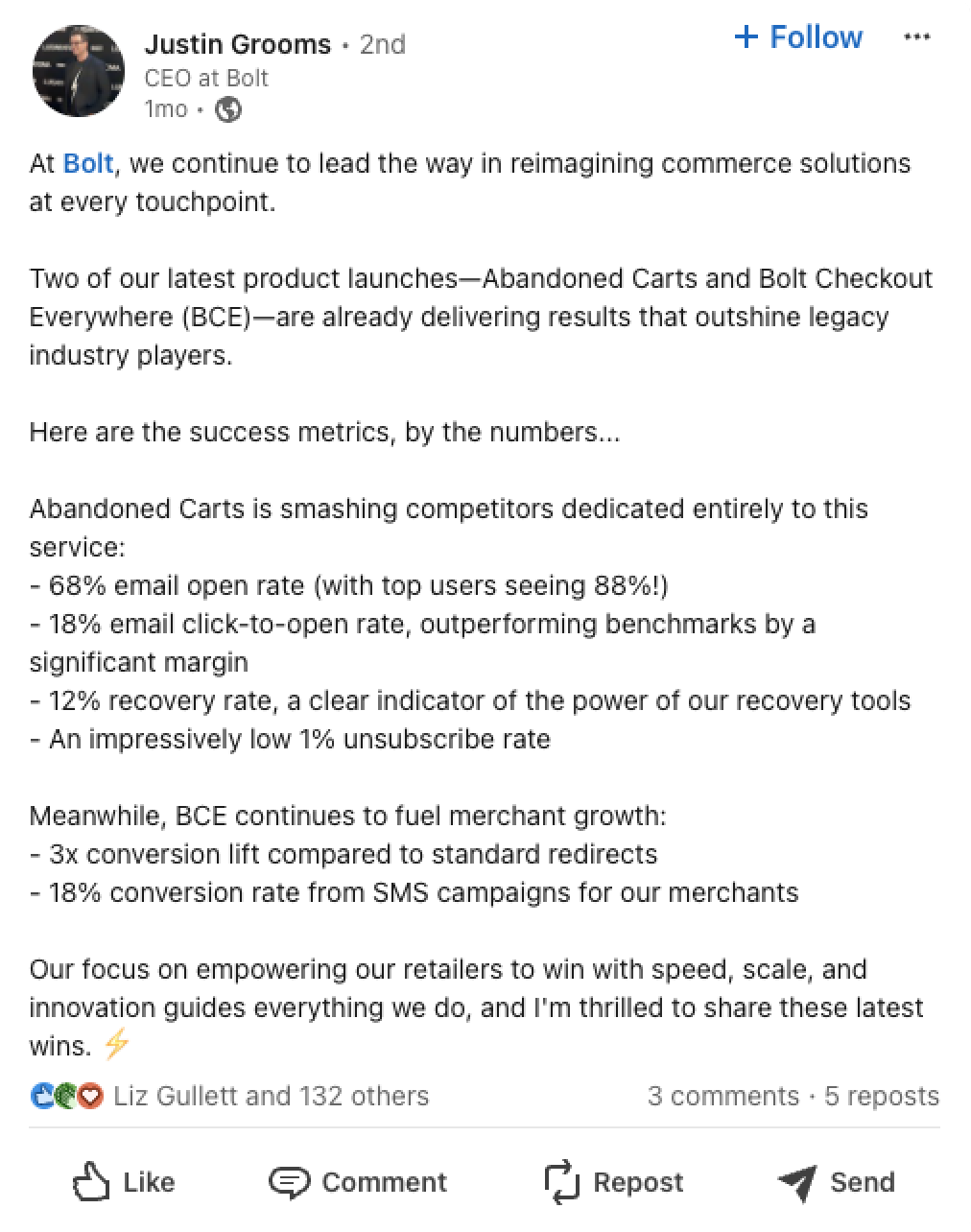
The Abandoned Cart solution successfully recovered more than $18M in lost revenue for select merchants and achieved the following outcomes:
45%
Abandonment rate (baseline)
68%
Email open rate
18%
Email click-to-open rate
12%
Avg recovery rate (up to 26.1%)
1%
Unsubscribe rate
100+
Merchants adopted
By focusing on user-centric design, seamless interactions, and data-informed decision-making, the solution outperformed industry incumbents like Klaviyo while delivering an intuitive experience for both shoppers and merchants.
*Recovered in the first month post launch
Future Vision
What next?
To enhance future cart recovery capabilities, I collaborated with the Product Manager to define a roadmap focusing on:
Multi-Channel Engagement
Introduce Email + SMS notification sequences with device recognition for better reach.
AI-Powered Personalization
Implement ML/AI-driven timing to send notifications at optimal moments based on shopper behavior. Enable personalized product recommendations using browse and cart data to suggest complementary items.
Through data-driven design, collaborative cross-functional work, and a focus on delivering impact, the Abandoned Cart recovery solution drove significant revenue recovery and elevated the overall checkout experience.
Want to see more of my work?
Learn more about my background and experience
Professional HistoryNext Project
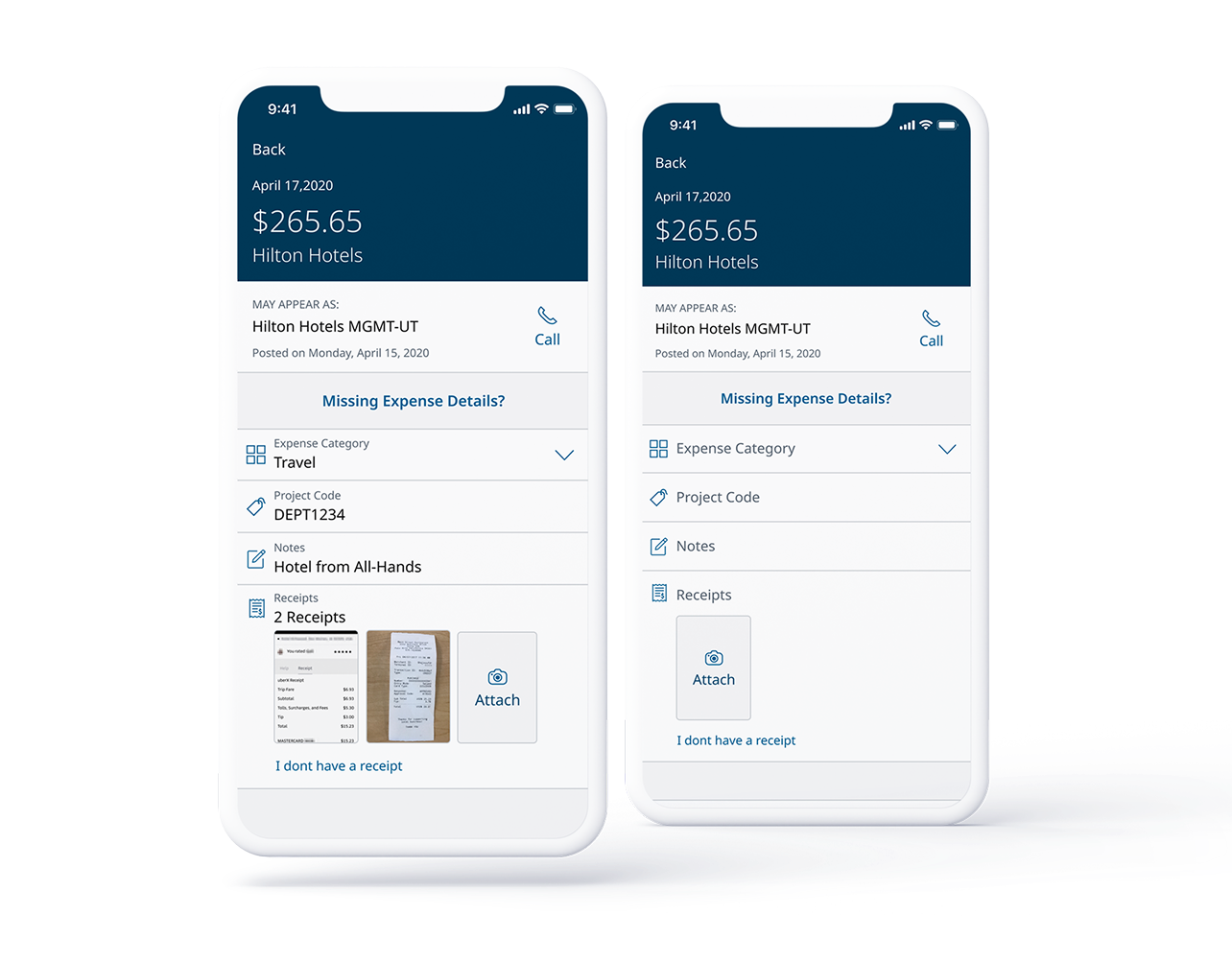
Automating admin workflows and simplifying expense reporting
View Case Study